

Top 10 Tips To Report And Document PAT in Cannock
The reports and documents generated from Portable Appliance Testing is tangible evidence of the compliance of a dutyholder with the Electricity at Work Regulations, 1989. It is not the testing as such that is crucial, but the documentation. This is the way inspectors from the Health and Safety Executive and other stakeholders, including insurance assessors and auditors, are able to verify the obligation of care. In the case of an electrical fire, thorough and comprehensive documentation is your best defence. It proves that you have a risk-based system-wide maintenance plan in place. The IET Code of Practice gives an outline of what constitutes adequate documentation, that goes beyond the pass/fail ticket and comprises extensive asset registers, as well as risk assessments and conformity certificates. Proper documentation should not be viewed as an extraneous thing, but instead an integral element of the safety procedure. This permits trend analysis and future risk assessments, audit trails, as well as the study of trends.
1. The PAT Testing Certificate, also called the Report of Inspection and Testing (RoI&T) in Cannock
This is what you need to deliver as the first thing after you have tested. It shouldn't be a single-page report or a lengthy document. A certificate compliant with the law must include all the information required: the name of the testing organization, the name of the tester and his/her qualifications, the date and address of the test, and a list of all appliances that were tested (with the unique ID number) and the results of all tests (visual and electronic) with a pass/fail grade for each item as well as the recommended inspection date. The certificate should be signed and date by the person who is responsible for the task.
2. The Asset Register: The Foundation of Documentation
The asset register is a master document that records all the lifecycles of every portable appliance. It should be a detailed log containing, at a minimum, an asset ID number (matching the label on the appliance) and a complete description of the item and its Cannock, as well as the classification (Class I/II) as well as the kind (e.g., IT, handheld, stationary) and model, manufacturer, and serial number. A good register will also include a detailed history of the dates of all tests, and remedial measures that were taken. This allows for a thorough review of every asset.
3. Failed Appliance Reports as well as Corrective Action Documentation in Cannock
The mere recording of an error is not enough. Documentation is required to trace the complete life-cycle of the issue. This should include a failure report detailing the nature of a fault (e.g. failure in the earth bond test 1.8O) and the immediate actions performed (e.g. item labelled FAIL was taken out of service and disconnected), and a log of the authorization procedure to repair or disposition. After the problem has been rectified, the report must include the results of a test retake along with the date that it was returned to service.
4. Labels and On-Asset Identification
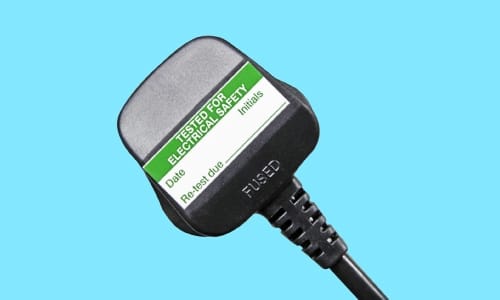
Physical labels on appliances themselves are an important element of the system for documentation. Every label should be long-lasting and non-conductive. It should clearly display the unique asset ID, a date of testing and the ID of the tester (or the company name) and the next inspection date (or the re-test date). The label provides users and inspectors an immediate visual indicator of the compliance. The information printed on the label must exactly match that in an asset register or a certificate.
5. Risk Assessment Documentation
It is necessary to document the risk assessment prior to deciding how frequently and what kind of testing is required. The report is an essential part of PAT documentation. It should detail the results, including equipment types, the environment where the equipment is utilized, the level of competency of the user and the rationale behind the chosen testing and inspection intervals. The document explains why high-risk products should be placed on a longer testing schedule and demonstrates a sensible approach based on risk rather than the blanket approach of a non-substantiated policy.
6. Evidence of Competence and Insurance in Cannock
The documentation file should contain evidence of the tester's competence. It should contain copies of relevant qualifications (e.g., City & Guilds 2377) and evidence that the tester's insurance policy for public liability is in good standing. Although not a direct recording of the test, the accompanying documentation is crucial as it validates everything. It could be used to prove to an enforcing agency that a particular person was properly appointed by the duty holder.
7. Calibration certificates of test equipment
The accuracy is crucial for every electronic test. This is why a UKAS-accredited calibration certificate must be provided for all test equipment. The certificate is usually renewed annually and demonstrates that the accuracy of the test equipment's readings. verified against national standards during the time testing was carried out. It also supports the reliability of any pass/fail decisions taken.
8. Digital Reporting Systems and Online Portals
Digital management is now the latest industry standard method. Numerous providers offer an online portal for their customers. This allows dutyholders to view their asset registers live, download current and historical certificates, and run reports 24/7. It's far superior to traditional papers-based systems. It reduces the risk of losing data, makes it easier to access documents during audits, offers the security of a permanent record and is much more easily accessible. The availability of this system is a sign of a professional service provider.
9. Retention of Long-Term Records and Data Security
Under the law of civil procedure, there is no specific statutory retention period. However, a claim for injury can be filed as early as 3 years following the date that the creation of the PAT record. Prudent practice is to retain the full documentation–including certificates, asset registers, and risk assessments–for at least the lifespan of the appliance or for a minimum of 5-7 years. Documents must be kept securely, whether physically filed systems or digital platforms, to protect the information and guarantee its accessibility for the period of time.
10. Documentation and its role in Audit and Enforcement in Cannock
Documentation is required in the event of an HSE inspection or audit, an electrical incident or an insurance audit. Evidence is needed to prove the care duty has been performed. Incomplete documentation, incorrect documents, or even missing documentation can result in enforcement measures (e.g. improvement notices), invalidated claim insurances, and even prosecution in worst-case scenarios. A robust documentation strategy goes beyond keeping records; it's an essential element of any legal defense strategy for businesses. See the most popular EICR inspections in Cannock for blog advice.
Ten Suggestions For Fire Extinguisher Service Technicians On Certification And Qualifications in Cannock
Fire extinguisher service within the UK is governed by a framework that ensures competency, safety and compliance. Unlike certain professions that are subject to licensing requirements from the state, the "Responsible" Person (as defined in the Regulatory Reform (Fire Safety) Order of 2005) is obliged to select a skilled professional. So, understanding the distinctions between accreditation and certification isn't only a formality. It's an essential aspect of doing the due diligence. Because there's such an array of providers, from highly acclaimed companies to individuals, it's essential to assess the worth and significance of each certification. A lack of credentials for a technician can make an insurance policy invalid, not meet legal requirements and, most important, leave your property and its occupants vulnerable. This guide outlines the ten most critical aspects of certifications to ensure that you choose a qualified partner in fire security.
1. The Gold Standard of Third-Party Certification: UKAS-Accredited (BAFESP101)
The BAFE SP101 certification is the most important. BAFE is a registration body that is completely independent. The SP101 scheme is specifically for the maintenance of fire extinguishers that are portable. Importantly, the scheme is accredited by UKAS (The United Kingdom Accreditation Service) which is the nation's sole accreditation body. It means the scheme in its entirety has been rigorously tested against international standard. A BAFE SP101 certificate that is accredited by UKAS is the most credible evidence of competence. It confirms that the company's employees, methods of working equipment, as well as Quality Management Systems are regularly inspected for consistency to British Standards.
2. The Alternative Benchmark FIRAS Certificate
FIRAS (Fire Industry Association Recognition and Accreditation Scheme) which is operated by Fire Industry Association, is another UKAS-accredited certificate scheme. It is comparable in terms of quality and rigor to BAFE SP101. FIRAS Certification gives the same degree of confidence that a firm is independently evaluated by an audit and determined to be in compliance with the relevant standard including BS 5306-3. If you are an individual with a responsibility, then a company that holds either BAFESP101 or FIRAS certificates represents a compliant decision. The key is the UKAS accreditation of the scheme itself.
3. The Foundation: Conformity with the BS 533-3 in Cannock
It is crucial to show that you are in compliance with British Standard BS 5306-3 :2017 for the purpose of qualifying or to certify. This code of conduct is the only definitive guideline for the maintenance of fire extinguishers. Professional technicians need to be educated in its rules, which dictate the procedures for annual inspections and monthly checks, basic services, 5-year extended services for water/foam/powder extinguishers, and 10-year overhaul for CO2 units. For auditing and confirming compliance certifications such as BAFE or FIRAS are available. Ask a company about how they adhere to the standards when evaluating their work.
4. Individual Technician Competence – The FIA Units of Competence
While certification from the company is important for the task, it is performed by technicians. The FIA Units of Competence are the most well-known of individual qualifications, are the best recognized. They are nationally recognized training courses that are evaluated according to National Occupational Standards. The key units include:
FIA Unit 001 Maintenance of Portable Fire Extinguishers (Core module)
Repair of portable extinguishers.
A skilled technician must to possess at least FIA Unit 011. Technicians performing extended services (e.g., 5-year discharges) should also be certified with Unit 010. Ask potential providers about their technician's specific credentials.
5. The Role of Trade Associations in Cannock
It is crucial to remember that certification is not synonymous with membership in a trade association. It's possible for a business to join these associations without being certified. It is not enough to show that the organization is competent. It is important to be looking for specific certifications (e.g. the BAFE Sp101) and not rely solely on logos.
6. Insurance: Public Liability and Professional Indemnity in Cannock
A good service company does not cut corners on insurance. Public Liability Insurance of at 5 million or more is necessary to pay for any damages that could occur to your home during the course of their work. Professional Indemnity Insurance can also be essential, since it will pay for rectifying any mistakes in their work or advice. It is a condition of certification. You should always ask for proof of insurance prior to using the services of any certified company.
7. Manufacturer-Specific Training
Although the principles of BS 5306-3 can be applied to all situations, there are distinct different models of extinguishers, valve mechanisms, or recharge methods. A highly qualified technician will often undergo manufacturer-specific training. It is especially important to take this step for systems with extinguishers that are less common or complex, like wet-chemical or clean-agent systems. This additional training ensures the technician is able to service the equipment in your facility correctly and safely without voiding any manufacturer warranties.
8. The Auditing Process How can certification be kept in Cannock
It is essential to recognize that certification is a continual process. BAFEas well as FIRAS-certified businesses are subject to audits every year conducted by accredited auditors. Audits can be conducted without notice and include reviewing documents and interviews with technicians as well as observing at-site work. These certificates are given significance by the ongoing external scrutiny. They guarantee that the competency is maintained and not a one-time assessment.
9. The "Competent Person " vs. the "Skilled Person'
There is a distinction between the law. The Fire Safety Order specifies that equipment maintenance must be performed by "a competent person". In case law, a competent individual is defined as an "person who has the right education, experience, and other qualities" to make sure that the measures are properly implemented. The term "skilled person" (or skilled tradesperson) has the physical skills to complete an activity. A trained technician working with fire extinguishers should possess both the technical skill and the expertise to comprehend the regulations, standards and the risks.
10. Due Diligence Auditing Certificates and Claims
The responsibility to verify qualifications lies with the person who is responsible. Logos on vans and websites aren't enough.
Verify online: The BAFE and FIA each have an online directory where you are able to find a specific business by name. This will confirm the status of their certification. in Cannock
Request Certificates. A trustworthy firm will be happy to give you proof of the BAFE SP101 certificate or FIRAS, along with insurance documents and proof of their technicians' FIA qualification. in Cannock
Check Expiry Dates: Ensure that all insurance policies and certifications are current and up-to-date. in Cannock
This process of verifying your main defense against hiring an unqualified provider. It is also a part of your due diligence. Take a look at the recommended Cannock fire extinguisher checks for site advice.
